Freelance Creative Work Checklist
A practical step-by-step guide to freelance creative work checklist, including preparation, instructions, common issues, tips, and next steps.
Freelance Creative Work Checklist
This guide explains how to approach freelance creative work checklist, including the preparation, practical steps, common mistakes, and final checks that help you finish with confidence.
Before You Start
Before diving into a new project, setting up a solid foundation is crucial. This involves gathering the right tools, understanding the context, and performing vital checks to protect your time and business.
What You Need
Having the right resources at hand streamlines your workflow and prevents delays. Think of these as your essential toolkit for successful freelancing.
Safety, Timing, or Context Checks
These checks are vital for mitigating risks and ensuring the project aligns with your capabilities and business goals.
Step-by-Step Instructions
Quick Reference
Common Problems When You Freelance Creative Work Checklist
Even with a solid checklist, freelancing can present challenges. Knowing these common pitfalls and how to navigate them can save you a lot of stress and time.
Scope Creep
This is when a client continuously asks for small additions or changes that fall outside the initial agreed project scope. Each small request adds up, consuming your time without additional payment.
Late Payments
A common and frustrating issue for freelancers. Unpaid invoices hurt your cash flow and can make running your business difficult.
Poor Communication
Misunderstandings about deliverables, timelines, or feedback can derail a project and damage client relationships.
Unrealistic Client Expectations
Clients sometimes expect a lot for a small budget, or have timelines that are simply impossible to meet realistically.
Burnout and Overwhelm
Taking on too much work or not managing your time effectively can lead to stress, reduced quality, and a loss of passion for your creative work.
Advanced Tips for Freelance Creative Work Checklist
Once you've mastered the basics, these advanced strategies can help you refine your process, grow your business, and command higher rates.
Automate Routine Tasks
Many administrative tasks in freelancing are repetitive. Automating them frees up your time for creative work and client management.
Specialise in a Niche
Instead of being a generalist, focusing on a specific niche or industry can make you a sought-after expert.
Build a Referral Network
Collaborating with other freelancers or agencies can lead to a consistent stream of high-quality leads.
Invest in Continuous Learning
The digital media landscape changes rapidly. Staying current with new tools, techniques, and industry trends is vital.
Create Service Packages
Offering fixed-price packages rather than hourly rates or custom quotes can simplify sales and help clients understand your value.
Freelance Creative Work Checklist FAQ
How often should I update my freelance creative work checklist?
You should review and update your freelance creative work checklist at least once every six months, or after every 2-3 major projects. This allows you to integrate lessons learned from recent experiences, adapt to new tools or workflows, and refine your processes for continuous improvement. Keep a running log of what works and what doesn't.
What if a client won't sign a contract?
If a client refuses to sign a contract, it's a significant red flag. Politely explain that a signed contract is a non-negotiable part of your professional process, as it protects both parties by clearly defining deliverables, timelines, and payment terms. Offer to address any specific concerns they have about the contract. If they still refuse, it's highly recommended to decline the project. Working without a contract leaves you vulnerable to scope creep, non-payment, and legal disputes.
How do I handle negative feedback or criticism?
Approach negative feedback professionally. First, listen carefully or read the feedback without getting defensive. Ask clarifying questions to ensure you fully understand their concerns. Separate the feedback from your personal feelings. Focus on finding a solution that addresses the client's needs while staying within the project scope and revision limits. If the feedback is subjective and deviates from the brief, politely guide the conversation back to the agreed goals.
When should I ask for a deposit?
It's best practice to ask for a deposit for almost all freelance creative projects. A typical deposit is 25-50% of the total project fee, payable before any significant creative work begins. This commitment from the client demonstrates their seriousness and provides you with initial financial security, covering some of your upfront time and costs. For very small, quick projects (e.g., under £100), you might consider full upfront payment.
What's the most important part of the freelance creative work checklist?
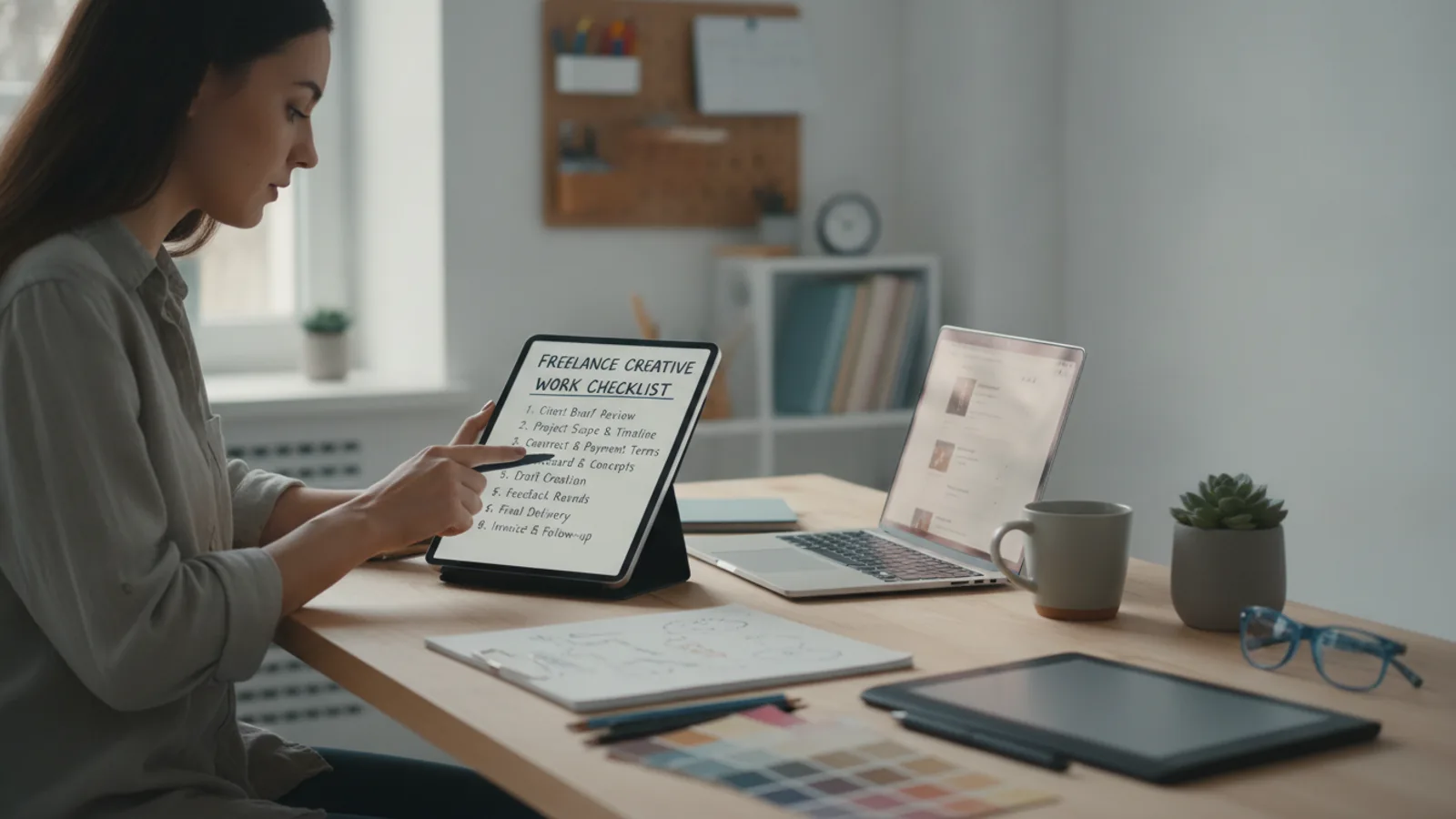
While every step is important, the most critical part is defining the project scope and securing a signed contract with clear payment terms. These foundational steps protect your time, effort, and income. Without a clear scope, projects can spiral out of control, leading to unpaid work. Without a contract, you have minimal legal recourse if issues arise. Prioritising these ensures a solid, professional start to every project.
Final Checklist for Freelance Creative Work Checklist
Use this condensed list to quickly verify you've covered all critical bases for your freelance project workflow.
Following this freelance creative work checklist consistently will help you manage projects with greater confidence, deliver higher quality work, and foster stronger, more reliable client relationships. It's an investment in the smooth operation and long-term success of your freelance business.